Material Science Guide
Polyester Mesh Fabric
From athletic wear to industrial filtration, from screen printing to architectural facades — one fabric serves more distinct engineering and design functions than almost any other textile category.
70%
of synthetic mesh fabrics produced globally use polyester as the primary fiber
20 to 500
mesh count range covering filtration, apparel, printing, and industrial uses
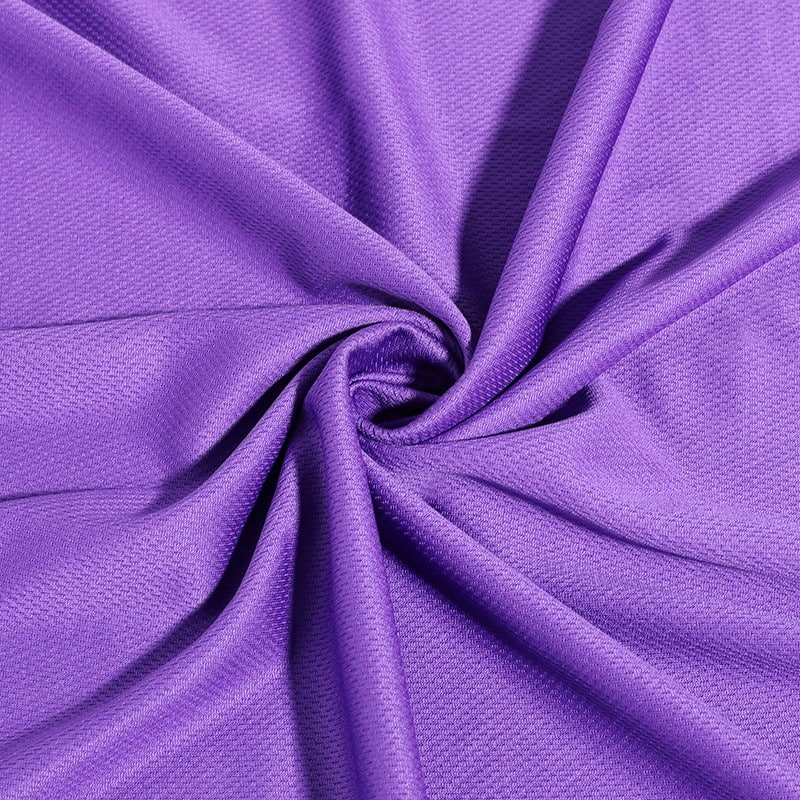
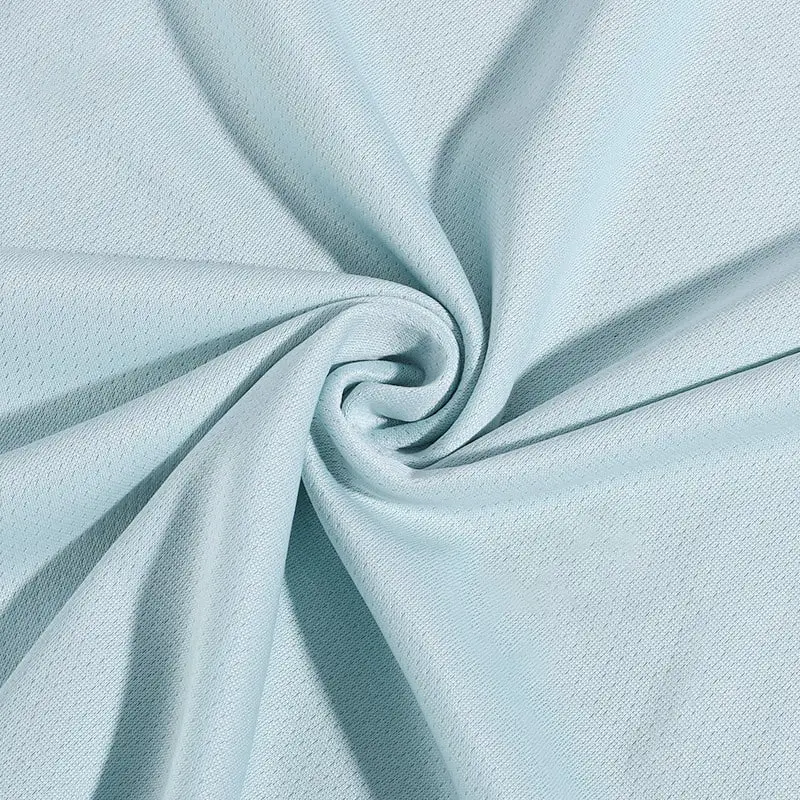
Polyester Mesh Fabric is an open-weave or knitted textile made from polyester filament or staple yarn, characterised by a regular pattern of open pores or apertures across the fabric surface that allow air, water, light, or particulate matter to pass through in a controlled and predictable manner. The fabric combines the engineering-grade properties of polyester fiber (dimensional stability, UV resistance, chemical resistance, low moisture absorption, and high tensile strength) with the functional geometry of a mesh structure (defined open area, consistent aperture size, and low weight per unit area) to produce a material that no solid-woven or knitted textile can replicate in applications where controlled permeability is the primary performance requirement.
Polyester Mesh Fabric is produced in aperture sizes ranging from 20 micrometres (fine filtration mesh used in laboratory and pharmaceutical applications) to 50 millimetres or larger (architectural and agricultural shading mesh), across a weight range of 40 to 500 grams per square metre, and in monofilament, multifilament, and combined yarn constructions. Its applications span sportswear lining, industrial filtration, screen printing, shade structures, sports nets, conveyor belts, medical textiles, and architectural facade systems.
Open Area
The percentage of the fabric surface that is open (not covered by yarn) determines flow-through performance. Typical values: 30% to 70% for apparel mesh, 20% to 50% for filtration mesh.
Mesh Count
The number of openings per linear inch or centimetre. Higher mesh count means smaller apertures and finer filtration. 80 mesh is standard for coarse screen printing; 300 mesh for fine detail work.
Yarn Type
Monofilament yarn (single continuous fiber) gives dimensional precision for filtration. Multifilament yarn (many fine fibers twisted together) gives softness and drape for apparel and architectural applications.
Understanding the manufacturing process of Polyester Mesh Fabric clarifies why it performs so differently from solid woven polyester or polyester knit fabrics, and explains the key specification variables that engineers and product designers use to select the correct mesh for each application.
Woven Polyester Mesh Fabric is produced on shuttle or shuttleless looms that interlace warp yarns (running lengthwise through the fabric) and weft yarns (running crosswise) in an open weave pattern where the yarns are spaced apart by a controlled distance rather than packed tightly as in standard fabric weaving. The aperture size and shape are determined by three variables set by the loom operator: the yarn diameter, the reed spacing (the gaps between warp yarn positions in the loom), and the pick density (how many weft insertions per centimetre). Once set, the geometric precision of the woven structure is maintained consistently across the full fabric width and length of the production run.
Monofilament polyester woven mesh — where each yarn is a single continuous filament of uniform diameter — achieves the highest aperture size consistency of any mesh construction type. This precision is critical for filtration applications where the aperture must be guaranteed not to exceed a maximum size to block particles above a defined dimension. A woven monofilament polyester mesh screen used in liquid filtration might specify an aperture of 100 micrometres with a tolerance of plus or minus 5 micrometres across the full fabric width, a precision achievable only with monofilament construction on a calibrated loom.
Knitted Polyester Mesh Fabric is produced on warp knitting or raschel knitting machines that form the fabric by interlocking loops of yarn rather than interlacing two perpendicular yarn systems. The knitted loop structure gives the mesh dimensional stretch in one or both directions, which the rigid geometry of a woven mesh cannot provide. This stretchability is the primary reason why knitted polyester mesh is preferred for apparel applications (sportswear, underwear linings, bra cups, shoe uppers) where the fabric must conform to body contours and allow freedom of movement, while woven polyester mesh is preferred for filtration and precision screen applications where dimensional stability under applied pressure is required.
Raschel lace and large-aperture knitted polyester mesh — often called "power mesh" in the lingerie and shapewear industry — combines mesh openness with significant stretch and recovery force (typically 20% to 40% elongation at body stretch forces) that provides compression and shape retention in foundation garments. The stretch recovery force is generated by the polyester yarn's elastic bending resistance within the knitted loop structure, without requiring the addition of elastane or spandex in the yarn blend for moderate compression applications.
The dominance of polyester as the fiber of choice for technical and functional mesh fabrics is not accidental. The combination of physical and chemical properties that polyester provides at a commercially accessible price has made it the standard for industrial, apparel, and architectural mesh applications globally. Understanding these properties explains why Polyester Mesh Fabric outperforms nylon mesh, polypropylene mesh, and natural fiber mesh alternatives in the majority of applications where mesh is specified.
Dimensional Stability
Polyester has low moisture absorption (less than 0.4% by weight at saturation) compared to nylon (4% to 8%) and natural fibers (10% to 30%). This means polyester mesh aperture geometry changes negligibly between dry and wet conditions, which is essential for filtration applications where aperture size determines filtration accuracy. A nylon mesh filter element may change aperture size by 2% to 5% from dry to wet condition — unacceptable in precision liquid filtration.
UV and Weather Resistance
Stabilised polyester retains 80% of its tensile strength after 2,000 hours of UV exposure in standard accelerated weathering tests. Unstabilised nylon loses 50% of strength in 500 hours of equivalent UV exposure. For outdoor architectural and agricultural mesh that must perform for 5 to 15 years without replacement, polyester with UV stabiliser treatment is the standard specification.
Chemical Resistance
Polyester resists dilute acids, alcohols, and most organic solvents without fiber degradation. It is resistant to bleach (sodium hypochlorite) at concentrations used in textile processing. This chemical resistance enables polyester mesh to be used in filtration applications for acidic process liquids, in food processing environments with sanitiser cleaning cycles, and in screen printing applications with solvent-based inks.
Tensile Strength and Abrasion Resistance
Polyester monofilament yarn has a tenacity of 4 to 7 grams per denier, providing the warp tension resistance needed for screen printing applications where the mesh is stretched tightly on a printing frame and subjected to squeegee pressure during each print stroke. High abrasion resistance at the yarn-to-yarn crossing points in the weave structure extends mesh service life in filtration applications with particulate-laden flow.
Thermal Stability
Polyester's glass transition temperature of approximately 75 to 80 degrees Celsius and melting point of 250 to 260 degrees Celsius provides stability in process environments up to 130 to 150 degrees Celsius for short periods. This allows polyester filtration mesh to be used in hot liquid filtration, high-temperature screen printing applications, and industrial conveyor belt mesh in moderate-temperature drying ovens.
Cost Efficiency
Polyester is one of the lowest-cost synthetic fibers available globally due to the scale of PET production for packaging and textile applications. At equivalent mesh construction specifications, polyester mesh costs 30% to 60% less than equivalent PEEK (polyether ether ketone) mesh, 20% to 40% less than nylon mesh, and 40% to 70% less than PTFE mesh, making it the default cost-performance choice for all applications within its chemical and thermal operating range.
| Fiber | Key Advantage Over Polyester Mesh | Key Limitation vs Polyester Mesh | Best Application |
|---|---|---|---|
| Nylon (PA) | Higher abrasion resistance, better impact toughness | Poor UV resistance, high moisture absorption changes aperture size | Indoor vibration sieving, food grade dry powder sifting |
| Polypropylene (PP) | Superior acid and alkali resistance, lower density (floats in water) | Lower UV resistance, lower tensile strength, narrower temperature range | Strong acid filtration, marine and water treatment applications |
| PEEK | Operating temperature up to 250 degrees C, exceptional chemical resistance | 5 to 10 times the cost of polyester mesh | High-temperature filtration, aerospace and chemical processing |
| PTFE | Non-stick surface, widest chemical resistance range | Very high cost, difficult to tension on frames | Corrosive liquid filtration, cleanroom and pharmaceutical processes |
| Stainless steel wire | Highest temperature resistance, non-combustible | Heavy, inflexible, subject to corrosion in acid environments | High-temperature oven conveyor mesh, structural security screens |
Polyester Mesh Fabric is one of the most broadly applied technical textiles in global manufacturing and construction, appearing in product categories as diverse as running shoe uppers and wastewater treatment belt filters. The following application profiles cover the major industry sectors and explain why polyester mesh is specifically chosen for each.
In athletic and performance apparel, knitted Polyester Mesh Fabric serves as the primary or lining fabric in garments where breathability and moisture management are the dominant performance requirements. The open structure of the mesh allows convective airflow through the fabric to cool the body during exercise, while polyester's low moisture absorption keeps the fabric dry against the skin even when wet with sweat. Most performance jerseys in professional football, basketball, and cycling use a knitted polyester mesh with 40% to 60% open area as the primary fabric, typically at weights of 100 to 160 grams per square metre.
The mechanical stretch of knitted polyester mesh (typically 20% to 50% elongation in the width direction without set, meaning the fabric returns fully to its original dimension after stretch) allows close-fitting performance garments to accommodate the full range of athletic movement without restricting the wearer. Flatlock seam construction joining polyester mesh panels eliminates the raised seam ridges that would chafe during repeated limb movement in endurance sports.
Woven monofilament Polyester Mesh Fabric is the standard filter medium for liquid and solid-liquid separation applications across food processing, beverage production, pharmaceutical manufacturing, chemical processing, and wastewater treatment. The geometric precision of woven monofilament construction allows filter elements to be specified with defined nominal aperture sizes (for example, 200-micrometre mesh for beverage clarification, 50-micrometre mesh for pharmaceutical liquid filtration) that produce predictable filtration performance.
In wastewater treatment, large-area belt filter presses use woven polyester mesh belts (typically 100 to 500 micrometre aperture, 2 to 5 metres wide, 10 to 30 metres long) that carry dewatered sludge through compression rollers while allowing filtrate to drain through the mesh. A single belt filter press in a municipal wastewater facility can process 5 to 30 tonnes of dry solids per hour through a polyester mesh belt that must maintain dimensional stability, chemical resistance to digestion gas byproducts, and consistent drainage performance across a service life of 2,000 to 5,000 operating hours.
Screen printing uses stretched woven Polyester Mesh Fabric as the stencil carrier in the printing frame. The mesh is coated with a photosensitive emulsion, exposed through a positive film of the design, developed to remove the unexposed emulsion from the print areas, and stretched on an aluminum or wood frame at a defined tension to form the printing screen. During printing, ink is forced through the open mesh apertures in the image areas by a squeegee moving across the screen surface, depositing a precise, defined layer of ink on the substrate below.
The mesh count used in screen printing directly determines the detail resolution and ink deposit thickness achievable: low mesh counts (30 to 80 threads per centimetre) are used for thick ink deposits on textiles and coarse materials, mid counts (90 to 150 tpi) for standard graphic printing on paper and fabric, and high counts (160 to 300 tpi) for fine line printing, halftone reproduction, and specialty electronic printing of conductive inks on circuit boards. Polyester is specified for screen printing mesh over nylon because of its lower moisture absorption (which prevents dimensional change that would shift the stencil position in high-humidity printing environments) and its superior resistance to the solvents in screen-printing inks and emulsion stripping chemicals.
Large-format Polyester Mesh Fabric with UV stabiliser treatment and open areas of 50% to 90% is used for building facade shadowing, greenhouse shade cloth, sports court shading, and privacy screening. The mesh's combination of light transmission control (allowing selective solar radiation reduction while maintaining natural light and airflow) and resistance to wind loading (the open structure reduces wind force on the mesh installation compared to a solid cladding panel) makes it the preferred material for permanent outdoor shade structures.
Architectural facade mesh systems use polyester mesh panels tensioned on stainless steel cable or rod grids to create ventilated building envelopes that reduce solar heat gain on glass facades while creating a distinctive visual texture for the building exterior. These systems are specified with detailed engineering calculations for wind load resistance, facade attachment point forces, and thermal expansion accommodation over the installation's 15 to 25-year design service life.
Medical-grade Polyester Mesh Fabric is used in surgical implant mesh (for hernia repair, pelvic floor reconstruction, and soft tissue reinforcement), wound contact dressings (where the mesh allows wound exudate drainage while keeping the dressing structure off the wound surface), and compression bandage constructions (where polyester mesh provides the structural framework for multilayer compression systems). Implantable polyester surgical mesh is manufactured from medical-grade PET monofilament to pharmacopoeia standards (USP, EP) that specify yarn purity, fiber diameter consistency, and knot/weld strength at the mesh intersections to ensure long-term biocompatibility and mechanical reliability in the body's tissue environment.
Specifying Polyester Mesh Fabric correctly requires identifying the application-critical parameters for the intended use and matching the mesh specification to those requirements systematically. The following criteria guide the selection process across the main application categories.
Aperture size (the clear opening dimension of each mesh cell) and mesh count (the number of openings per unit length) are inversely related for a given yarn diameter. For filtration applications, the aperture size determines the maximum particle size that will pass through the mesh. For printing applications, the mesh count determines resolution capability. For apparel, the aperture size determines breathability and visual appearance (whether the mesh appears transparent or opaque on the body). Always specify both aperture size and mesh count together with the yarn diameter to fully define the mesh geometry — two meshes with the same count but different yarn diameters have significantly different aperture sizes and open area percentages.
Open area percentage is the most important specification for airflow, fluid flow, and light transmission applications. It is calculated as the percentage of the total fabric surface area that is open (not covered by yarn material). Open area directly determines the flow resistance of the mesh for fluid or airflow applications, and the shading factor for architectural and agricultural mesh. At equivalent mesh count, a mesh with finer yarn diameter has a higher open area percentage and lower flow resistance than a mesh with thicker yarn diameter.
Choose monofilament polyester yarn construction for applications requiring aperture precision, resistance to fiber shedding, and easy cleaning — including filtration, screen printing, and food contact applications. Choose multifilament polyester yarn construction for applications requiring softness against the body, visual texture, drape, and light diffusion — including apparel lining, shade cloth, and decorative architectural mesh. Some applications (fine filtration of biologically active fluids, for example) specify monofilament construction specifically to avoid the inter-fiber spaces within multifilament yarns that can trap particulate matter and harbor biological growth between cleaning cycles.
Weight affects structural integrity, drape, resistance to mechanical loading, and material cost per unit area. Apparel mesh: 60 to 180 grams per square metre. Industrial filtration mesh: 150 to 400 grams per square metre. Architectural shade mesh: 100 to 350 grams per square metre. Screen printing mesh: 40 to 120 grams per square metre. Heavier mesh provides higher tear resistance and dimensional stability under tension but adds material cost and may reduce open area percentage.
01
What is polyester mesh fabric made from?
Polyester Mesh Fabric is made from polyester yarns derived from PET (polyethylene terephthalate) resin, a thermoplastic polymer produced from purified terephthalic acid and ethylene glycol. The PET resin is melted and extruded through spinnerets to produce either monofilament (a single continuous fiber) or multifilament (multiple fine fibers twisted together) polyester yarn. These yarns are then woven on looms in an open pattern or knitted on warp or raschel knitting machines to form the mesh structure. The specific properties of the finished mesh depend on the yarn type (monofilament vs multifilament), yarn diameter, the density of yarns per centimetre in the fabric, and any finishing treatments applied after fabric construction.
02
Is polyester mesh fabric breathable?
Yes, Polyester Mesh Fabric is significantly more breathable than solid woven or knitted polyester fabrics. The open apertures in the mesh structure allow convective airflow directly through the fabric, which is the primary mechanism of cooling in athletic garments. A typical sportswear knitted polyester mesh with 40% to 60% open area allows 300 to 800 cubic metres of air per hour per square metre to pass through at standard differential pressure — comparable to breathing in free air rather than through a textile barrier. The fabric's breathability is proportional to its open area percentage: a mesh with 60% open area is approximately twice as breathable as one with 30% open area at the same fabric weight and construction type.
03
How durable is polyester mesh fabric compared to nylon mesh?
Polyester mesh fabric and nylon mesh have different durability profiles that make each preferable in specific conditions. Nylon mesh has higher abrasion resistance at the yarn-to-yarn crossing points (approximately 30% to 50% more abrasion cycles to failure in standard abrasion tests) and higher impact toughness under sudden load. Polyester mesh has better UV resistance (retaining strength over 4 times longer in UV exposure tests), better dimensional stability in wet conditions (aperture size changes less than 0.5% wet versus dry, compared to nylon's 2% to 5% change), and better resistance to sunlight-induced color fading. For outdoor applications and applications involving wet-to-dry cycling, polyester mesh is more durable in practice. For indoor abrasion-intensive applications (vibration sieving, mechanical particle separation), nylon mesh may outperform polyester in terms of service life at the specific wear points.
04
Can polyester mesh fabric be dyed or printed?
Yes, Polyester Mesh Fabric can be dyed using disperse dyes under high-temperature high-pressure dyeing conditions (typically 130 degrees Celsius in an autoclave dyeing machine), producing vibrant colors with excellent wash and lightfastness at rating 4 to 5 on the ISO scale. The mesh structure creates more surface area per unit weight than solid fabrics, which can cause color variation between mesh and solid-woven panels in the same garment if the dyeing process is not adjusted for the different dye uptake rates of the two fabric constructions. Digital sublimation printing (transferring disperse dye designs from printed paper to polyester by heat press) is the dominant decoration method for athletic jersey mesh, producing full-color photographic-quality images on the mesh surface without blocking the apertures or reducing breathability.
05
What mesh count is used for screen printing fabric?
Screen printing on fabric uses Polyester Mesh Fabric in mesh counts of 43 to 90 threads per centimetre (approximately 110 to 230 threads per inch). Lower mesh counts (43 to 55 per centimetre) are used for printing thick plastisol inks on dark fabric backgrounds, specialty effect inks (glitter, puff), and discharge printing where high ink deposit volume is needed. Medium mesh counts (55 to 77 per centimetre) are used for standard graphic printing on light and dark garments. Higher counts (77 to 90 per centimetre) are used for fine halftone printing, simulated process color printing, and water-based ink applications where a thinner ink deposit with better hand is required. For printing onto paper and hard surfaces (ceramic, glass, electronics), mesh counts extend to 150 to 300 per centimetre for the finest detail and precision work.
06
Is polyester mesh fabric suitable for outdoor use?
UV-stabilised Polyester Mesh Fabric is suitable for long-term outdoor use and is the standard material for shade sails, agricultural shade cloth, sports court barriers, and architectural facade panels. The key specification for outdoor use is the presence and level of UV stabiliser in the polyester fiber — typically a hindered amine light stabiliser (HALS) compound added during fiber extrusion at 0.3% to 1.5% by weight. UV-stabilised outdoor polyester mesh is rated for service lives of 5 to 15 years depending on UV intensity at the installation location, with UV intensity highest at equatorial and high-altitude locations. Without UV stabilisation, standard polyester mesh loses 30% to 50% of its tensile strength within 6 to 12 months of direct outdoor exposure, making UV stabiliser specification mandatory for any outdoor application with a service life expectation above one year.
07
How is polyester mesh fabric cleaned and maintained?
Apparel Polyester Mesh Fabric is machine washable at 30 to 60 degrees Celsius using standard detergent, and can be tumble dried at low heat. Do not use fabric softener, which can coat the mesh fibers and reduce moisture-wicking performance by creating a hydrophobic residue layer on the polyester surface. Industrial filtration mesh is cleaned by backflushing (reversing the flow direction to dislodge trapped particles), ultrasonic cleaning in a bath (for fine filtration mesh with submicron particles that cannot be removed by backflushing alone), or chemical cleaning with detergents or dilute acids depending on the nature of the trapped contaminant. Architectural shade mesh can be cleaned with low-pressure water hosing and mild detergent solution; high-pressure washing should be avoided on tensioned architectural installations where the jet pressure could deform the mesh apertures or damage the edge binding and eyelet attachments.
08
What is the difference between woven and knitted polyester mesh fabric?
Woven Polyester Mesh Fabric is produced by interlacing two perpendicular yarn systems (warp and weft) on a loom in an open pattern, producing a dimensionally stable structure with precise, consistent aperture geometry that does not stretch significantly in either direction when tension is applied. This makes woven mesh the choice for applications requiring aperture precision (filtration, screen printing). Knitted polyester mesh is produced by forming interlocking loops of yarn on a knitting machine, creating a structure that stretches in one or both directions (depending on the knit type) and recovers elastically when the stretch force is released. This stretchability makes knitted mesh preferable for body-conforming garments, medical compression textiles, and applications where the mesh must accommodate shape changes without puckering or restricting movement. Woven mesh has more dimensional stability; knitted mesh has more flexibility and comfort.
09
What weight of polyester mesh fabric should I specify for different applications?
Weight in grams per square metre (GSM) is a key specification for Polyester Mesh Fabric across different applications: lightweight mesh (40 to 100 GSM) is used for screen printing, fine filtration, and athletic garment lining where minimising added weight is a priority; medium weight (100 to 200 GSM) covers standard sportswear fabric, shade cloth, and medium-duty filtration belts; heavy weight (200 to 500 GSM) is used for industrial conveyor belt mesh, heavy-duty filtration press belts, architectural facade panels, and security barrier mesh where structural strength under continuous load is more important than fabric lightness. Always specify GSM alongside mesh count and aperture size, as two meshes with the same count can have very different GSM depending on their yarn diameter, and the GSM affects both the structural strength of the fabric and its raw material cost per unit area.
10
Where can I source polyester mesh fabric and what certifications should I look for?
Polyester Mesh Fabric is sourced from specialty technical textile manufacturers in China (the world's largest producer, with major production centres in Jiangsu, Zhejiang, and Guangdong provinces), South Korea, Taiwan, Germany, and the United States. For apparel applications, look for OEKO-TEX Standard 100 certification confirming the mesh is free from harmful substances at the concentration limits relevant to the specific end-use product category. For food contact filtration applications, confirm the mesh is produced from food-grade PET resin compliant with EU Regulation 10/2011 or US FDA 21 CFR 177.1630 for polyester used in food contact applications. For medical applications, confirm USP Class VI biocompatibility testing and ISO 10993 biological evaluation documentation. For screen printing mesh, ISO 9001 quality management certification from the manufacturer confirms the aperture size and count specifications are controlled within the stated tolerances across production batches.
Quick Answer: What Is Polyester Mesh Fabric? Polyester mesh fabric is a lightweight, breathable, and durable woven or knitted textile made from polyester fiber...
READ MOREPolyester mesh fabric has grown from a functional specialty material into one of the most widely used textiles in modern apparel and technical production. Its...
READ MOREMill Notes - Performance Knits Polyester Sports Fabric A working guide to knit structures, weights and finishes, written from the knitting floor rather than th...
READ MOREMay 27, 2026 – Global — The polyester mesh fabric industry is witnessing robust global growth in 2026, fueled by surging demand across sportswear, industrial m...
READ MORE Ready To Customise
 100% Polyester Knitted Bird Eye Fabric: A Technical Guide to Breathable Knits
100% Polyester Fabric Explained: A Manufacturer's Guide to Performance Knits

Telephone: +86-18268669232

Email: [email protected]

Company Address
Linxi Village, Xiaolin Town, Cixi City

 English
 عربى
عربى 中文
中文