There is a quiet complexity in every yard of polyester interlock fabric. It feels smooth, sits stable, and looks understated—yet beneath that surface lies a precisely orchestrated manufacturing process that begins with a single polyester filament and ends with a double-faced knit trusted in activewear, team uniforms, and structured outerwear alike.
For designers, product developers, and procurement teams, understanding this process is more than a technical exercise. It is the foundation for smarter sourcing decisions, more precise communication with suppliers, and a clearer sense of how a fabric will perform before it reaches the cutting table.
Polyester interlock is a double-knit fabric construction produced entirely from polyester yarn. Its defining feature is how it is knitted: two separate jersey layers are formed simultaneously and interlocked with each other, course by course. The result is a fabric that is noticeably thicker and more stable than single jersey, with two identical faces and no distinct wrong side.
Because of this structure, interlock sits neatly between performance knitwear and everyday apparel. It offers a smooth hand feel, good recovery, and a stable body that does not curl at the edges—qualities that pattern makers and sewing teams appreciate long before a garment reaches the consumer.
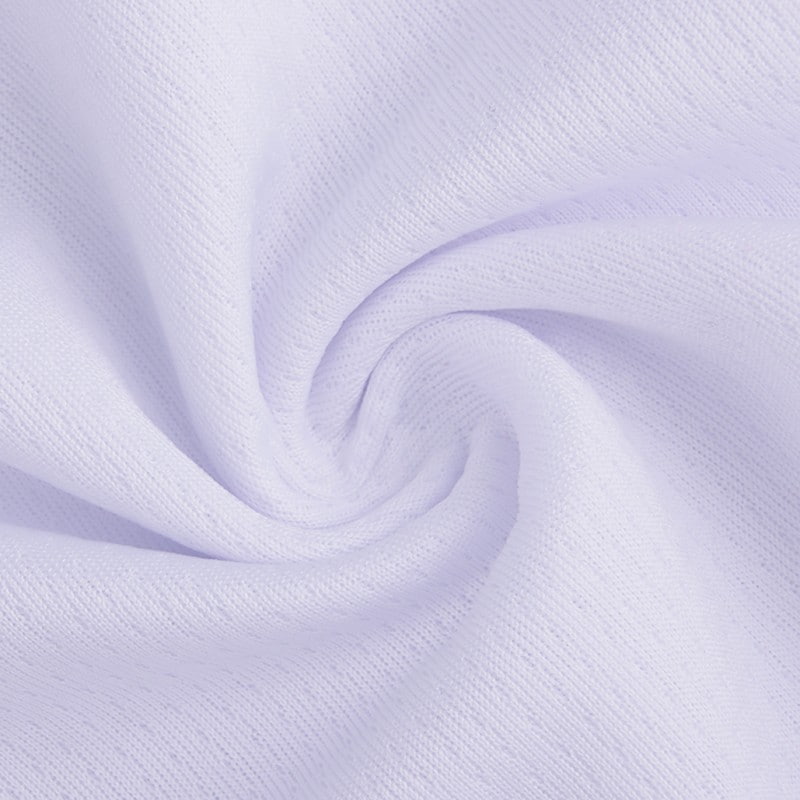
 Lightweight Breathable Polyester Interlock Knit Fabric for Summer ActivewearThis feather-light 140gsm interlock offers breathability and moisture control, making it ideal for sun-protection clothing and sports inner layers. Its stable body resists curling.View Product →
At the heart of polyester interlock manufacturing is a specialized piece of equipment: the double-bed circular knitting machine. Unlike a single-bed circular machine, which uses one set of needles arranged in a circle, an interlock machine carries two sets of needles mounted on two opposing beds.
The two needle beds work in constant synchronization. Each bed knits its own jersey layer, and the two layers are joined by the interlocking action of the needles—which is exactly where the name interlock comes from. The loops of one bed pass through the loops of the other, literally locking the fabric together.
On a well-tuned machine, the gap between the beds is carefully controlled to ensure consistent loop length and even fabric weight. For a 150-gram interlock, this precision is what separates a comfortable, durable textile from one that tears easily or loses its shape after a few washes.
During knitting, the two beds alternately form loops. On one stroke, the front bed needles draw the yarn and create a loop; on the return stroke, the back bed needles do the same. Since each course is actually a pair of interlocked rows, interlock fabric grows roughly twice as slowly as single jersey—but it gains a significant measure of stability in return.
This slower build means that producing 100 meters of interlock takes more machine time than the same length of single knit. The payoff is tangible: the fabric resists runs and snags, holds its shape through repeated wear, and supports clean cutting in high-volume garment production.
People often overlook how much interlock stability depends on machine settings. You can knit with excellent polyester yarn, but if the machine is not set correctly, the fabric will still fail.
The machine is only one part of the story. In an experienced factory, polyester interlock production moves through a series of carefully controlled stages, and each one influences the final hand feel and performance.
High-quality interlock begins with high-quality feeder yarn. For polyester interlock, the starting point is usually a false-twist textured filament chosen for its strength, dye uptake, and consistent diameter. The yarn is wound onto large cones and conditioned before it is loaded onto the knitting machine. Even package tension matters: uneven tension can lead to streaks, stripes, or subtle variations in weight across the roll.
Once the yarn is loaded, the double-bed circular machine runs at a carefully set speed, matched to the yarn quality and target fabric weight. Running faster is tempting from a productivity standpoint, but it risks needle wear, higher breakage rates, and fine defects on the fabric surface. Reputable factories calibrate each machine to the specification before production begins.
As the fabric is knitted and wound onto rolls, it moves to the inspection stage. Inspectors run the fabric over a lit table, checking for yarn defects, needle lines, oil stains, and weight consistency. This is the first quality gate, and it matters more than most buyers realize: catching a defect here prevents it from affecting hundreds of meters of downstream fabric.
Raw polyester interlock has a slightly dull, greyish appearance. It gains its final character through dyeing and finishing. For polyester, high-temperature disperse dyeing is the standard route: the fabric is dyed at elevated temperatures so the dye molecules can penetrate the fibers, producing colors that survive repeated washing and light exposure.
After dyeing, the fabric goes through a series of finishing steps—dewatering, stretching, heat-setting, and often a softening or moisture-wicking treatment. Carefully controlled heat-setting locks in the fabric's width, shrinkage, and long-term stability.
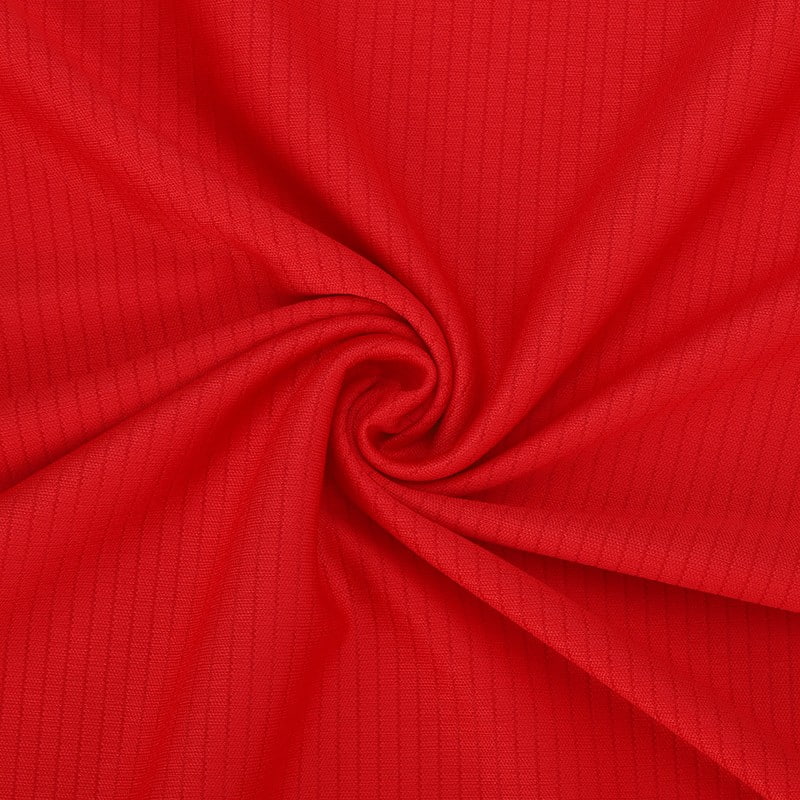
 Piece Dyed Polyester Interlock Fabric with High Colorfastness and Custom WeightsFeaturing piece dyeing for consistent colors and wash fastness of at least 4, this customizable fabric suits quick-response orders and team uniforms with small batch color needs.View Product →
What makes polyester interlock such a dependable choice across so many product categories? It comes down to a combination of structural and tactile properties:
These properties are not accidental. They come from yarn selection, machine calibration, and finishing choices that a skilled manufacturer controls on every production run.
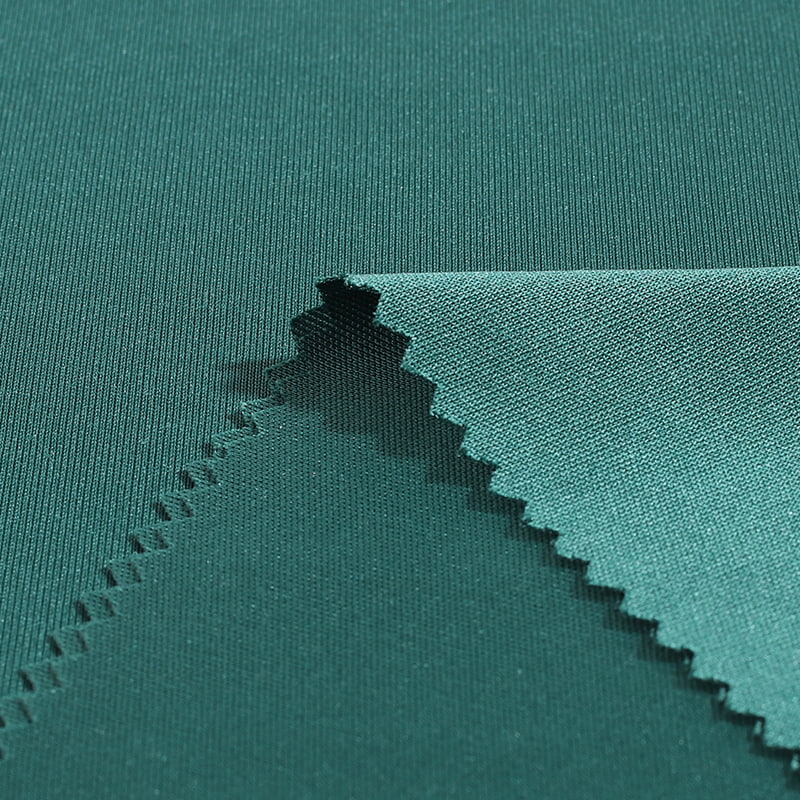
 Quick-Dry Cooling Polyester Interlock Fabric for Activewear and Gym WearDesigned for sportswear, this 180g interlock combines quick-dry moisture wicking with a smooth stretch finish, offering durability and comfort for athletic and athleisure garments.View Product →
Polyester interlock is produced in a range of weights and widths, each aligned with a different end use. The table below offers a quick look at how these specifications map to applications.
| Weight | Fabric Structure | Common Applications |
|---|---|---|
| 140 gsm | Lightweight breathable interlock | Sportswear, performance layering |
| 150 gsm | Standard interlock | Activewear tops, polo shirts |
| 165 gsm | Smooth-surface interlock | Dresses, casual shirts, uniforms |
| 170 gsm | Opaque durable interlock | Structured garments, outerwear |
Because it balances stability with comfort, polyester interlock has established itself across a wide spectrum of apparel segments. It is a particularly strong choice for:
This versatility is one reason polyester interlock remains a workhorse across the textile industry. It is not a novelty fabric; it is a dependable, engineered solution.
Producing consistent polyester interlock at scale requires more than owning knitting machines. It requires a production floor where every parameter—yarn tension, machine speed, dyeing temperature—is understood and controlled. This is the difference between a fabric supplier and a true manufacturing partner.
At Cixi Derun, our production floor spans 36,000 square meters and runs more than 200 high-precision circular knitting machines. We have spent nearly two decades refining our polyester interlock fabric across weights from 140 gsm to 170 gsm, with finishing options that include piece-dyeing, quick-dry cooling, and moisture management.
What we have learned from supplying sportswear brands, garment factories, and international buyers is that consistency matters as much as capability. Cutting lines are unforgiving—when a fabric roll varies in weight or shade, the consequences appear in the finished garment. Our role is to ensure that every roll leaves the factory to the same specification.
Beyond production, we support clients through sampling, customization, and dependable delivery. Each enquiry is handled by a team that understands the interlock manufacturing process, not just the product catalog. That is what a real manufacturing partnership looks like.
The polyester interlock manufacturing process is a blend of machine precision, material knowledge, and disciplined quality control. From the first yarn cone to the finished roll, every stage shapes the final hand feel, performance, and durability of the fabric.
For brands and manufacturers looking for a dependable double-knit fabric, understanding this process is the first step toward smarter sourcing decisions.
A Derun Editorial — Fabric Engineering 100% Polyester Fabric: A Study in Structure It shapes a running shoe’s upper, lines a structured jacket, and lifts a go...
READ MOREMay 27, 2026 – Global — The polyester mesh fabric industry is witnessing robust global growth in 2026, fueled by surging demand across sportswear, industrial m...
READ MOREIn the deep logic of the apparel fabric supply chain, polyester lining fabric is not merely a layer of covering inside a garment; it is the structural key that...
READ MOREPolyester mesh fabric has grown from a functional specialty material into one of the most widely used textiles in modern apparel and technical production. Its...
READ MORE Ready To Customise
100% Polyester Knitted Bird Eye Fabric: A Technical Guide to Breathable Knits
100% Polyester Fabric Explained: A Manufacturer's Guide to Performance Knits

Telephone: +86-18268669232

Email: [email protected]

Company Address
Linxi Village, Xiaolin Town, Cixi City

 English
 عربى
 中文